One of the most important strategic and cultural levers that exists in an organisation is trust. It is often neglected, misunderstood and badly handled. This costs companies and organisations a surprising amount of time, energy and money.
Strategy
I define strategy as making the best possible use of your resources and capabilities. “Do what you can, with what you have, where you are.” – Theodore Roosevelt. Trust has a massive impact on the way that resources are managed, the most precious of which are time, energy and money, and the people that make your organisation possible. One of the most fascinating resources I have encountered as I have learned and grappled with trust in organisations is the Edelman Trust Barometer which shows graphically, through clear research what trust provides in an economy. This is a global measure, but it plays out in smaller organisations too. Trust is a strategic lever.
Cultural
“Culture eats strategy for breakfast” – Peter Drucker, emphasises that a company’s culture, its shared values, beliefs and employee behaviors, has a greater impact on success than its strategic plan. Trust is at the heart of how people in an organisation behave, which impacts the bottom line and impact that organization is able to have. Edelman believes that trust is the ultimate currency in the relationship that all institutions – business, governments, NGOs and media – build with their stakeholders. As an Organisational Development facilitator and coach, I most commonly work with the internal stakeholders (employees) of organisations. And as is the nature of these things, if internal trust in an organisation is low, it will reflect out into relationships with clients and beneficiaries. This costs money and can sometimes even threaten an organisation. When people don’t trust you, they don’t want to deal with you. Trust is a cultural lever.
Economic sense
Steven MR Covey wrote a book called The Speed of Trust, which unpacks the economic and financial cost of low trust environments. He calculated the cost of fraud, bureaucracy, waste, dishonesty, disengagement, time theft, office politics, unproductive meetings, interdepartmental conflict, policies and procedures and churn of both employees and customers, and found that trust puts a huge frictional cost onto organisational life of billions of lost dollars a year.
When people are wasting time, demotivated or dishonest, the financial consequences for a business become very tangible. Employee churn costs such as hiring, training and firing people are more than people think. It costs far more to engage a new client than to keep clients, so low trust is very expensive. Low trust environments breed dishonesty and time theft. Trust is an economic lever.
How to build trust
Most people relate to trust as something that is given and earned, and once broken cannot be repaired. This is not a useful way to think about it. Trust is generated between people all the time, through many small and big experiences and moments.
Trust is something that can be built, constructed, and maintained. There are some very clear frameworks that can be used to talk about trust as an organisation, or between people in the organisation. Fundamentally it comes down to developing practices and processes that generate trust. This will occur across a number of aspects of an organisation.
There are structural issues that support or destroy trust, such as the contracts, agreements and policies in a business, and there are communication practices necessary to build, maintain and restore trust. It requires careful setup and good maintenance, and it’s an excellent investment in any business.
The advantages of building trust are that you increase productivity and innovation, as well as improving employee engagement and morale. The superpower that trust offers is making better, faster decisions. It also solves some serious problems, like preventing micro-management, solving conflict more effectively and reducing employee and client turnover. It’s an all-round organisational multivitamin!
There are amazing resources available to understand trust better. Brene Brown’s team developed a wonderful tool called BRAVING, which breaks down the behaviours in a useful way.
If you are a leader or manager who suspects that some of your organisational issues might be trust related, contact me for an exploration session to see how I could support you to think about it either on your own in a coaching session, or with your team.
You are struggling to work out what to focus on, what is important and how you can move forward. You are stuck and frustrated and possibly overwhelmed…
Many organisations get stuck in a time trap, not having enough time to work ON the business, because you are stuck working IN the business.
I often meet leaders and organisations that work incredibly hard, who are deeply committed to the results they are trying to achieve, and are frustrated because they feel that they are not getting there. What often happens is that they are so stuck in operational day-to-day thinking, that they get overwhelmed and are not always getting to what is important. This is far more common that most people realise. Taking the time to ensure that you are working on what matters makes a material difference to your results, stress levels and sustainability.
First, you have to clarify what matters and why it matters. Priorities are not always obvious and can often be counterintuitive. For example, sometimes in order to create capacity, you have to make time for your team, rather than just get a new team member. Identifying what is most important is the first step. The second step is to figure out how to make sure that what is important is done first, supported and the scaffolding is created to ensure its success. This helps with the overwhelming feeling of being too busy.
Step 1 – Identifying what is important.
This is different for every organisation, but critical to the sustainability of all. Understanding your values, and how you create value in the world by what you produce or offer, is critical to long-term success and sustainable outcomes. We don’t often think about these things because we are too busy doing, but that can be counterproductive. Taking time to think about how to organise resources in sustainable ways is essential to success (profitability or impactability).
This is basically the reason for strategy. Strategy and strategic questions assist you and your team to identify the crucial work for your organisation to grow and sustain. What are the most important things for you and your team to get right in the next 6, 12, 18 months for your organization to thrive and produce the results/impact you want?
Steven Covey writes about “First things First” in 7 Habits of Highly Effective People, an oldie, but a goodie! Another great resource is Eisenhower’s quadrant. It’s a fantastic way to work with day to day priorities, and it is still useful to do strategic thinking because it looks at your context and asks questions you don’t often ask yourself.
When you are very busy with the operational realities of your work, it can be very challenging to make time and space for working on what really matters. Operational emergencies and firefighting will often crowd out important work that is not urgent (see quadrant above). The real engine room of growth and sustainability is working in the second quadrant, this is often where process, structure, team development and culture live.
Take a moment to answer the question below.
What are the most important RESULTS you would like to create in your business in the next 12 months?
Think about the 5 or 6 things you really need to get right in the next 6-12 months for your organisation to thrive. Write it in the present tense as a clear tangible outcome. Example:We are profitable and have reduced expenses. We have an effective website that generates leads.
1.
2.
3.
4.
5.
6.
Step 2 – How do we make sure what matters is done first?
Once you have identified your priorities, it is then absolutely critical to ensure that they are translated into time and space in your schedule and in your team’s schedule. This next part of the work is to allocate the time you have to ensure that the important things get done first. This is trickier than it seems and takes practice. I have seen many beautiful strategy processes gather dust and never really materialise because people couldn’t figure out how to fit it into an already demanding work schedule.
One of my favourite tools for doing this is the Glass Jar exercise.
Glass Jar: Time available in a day – 24 hours
Rocks: Big important tasks or high level goals for your business and life – These go into your schedule first, make sure you and your team focus on them every day.
Pebbles: Tasks with average importance – try and delegate as many as you can.
Sand: Small, unimportant tasks – this is where the most time gets wasted, try and get rid of them.
Don’t start with easy, unimportant stuff! If you think about what you answered in the previous question, they would be the rocks here. They require focus and often are difficult and challenging tasks. For this reason, we often do the easier, less challenging tasks first and then end up not having time for the REALLY important things. This affects our profitability, our results and our stress levels.
What do you need to delegate or get rid of urgently to make the best use of your time?
Identify the low value activities that take up too much time and could be delegated to someone else.
1. 2.
3. 4.
5. 6.
Making the time to identify what your priorities are and how to focus on them is a very powerful way to create capacity in your life and organisation, as well as achieving the results you want, as opposed to being on autopilot and not being able to see the wood for the trees. It’s not easy, it takes considerable time and effort to make this work in an organisation.
Make the time, it’s worth it!
If you are thinking “yes, this sounds great!”, but don’t know where to start, consider contacting me for an exploration session to see how I could support you and your team to untangle priorities.
When appropriate process and structure are applied in emergent and thoughtful ways in an organisation, it can increase the capacity and longevity of the organisation in astonishing ways. Good process and structure can leverage people’s time and abilities, information, assets, products and services in meaningful and measurable ways. As you grow, what is appropriate keeps changing, as the world changes faster and faster, organisations need to take time to think about how they organise themselves.
I often describe myself as a process junkie. I have a deep and abiding love for good processes. When I am not sure how to approach something, or I am dealing with a challenging situation, my first impulse is always to find a process that will help me.
Process can sound like such a dry word and can feel restrictive and prescriptive when done in the wrong way. People can resist process and make staying on track very difficult. When process meets a real need, is co-created as much as possible and is implemented as a living thing, it can be deeply transformative in a team and organisation.
Many people think you don’t really need process in smaller organisations, but a well designed process can make a HUGE difference in smaller organisations. Anywhere from 10 to 200 people, process is the gamechanger.
Process as flow
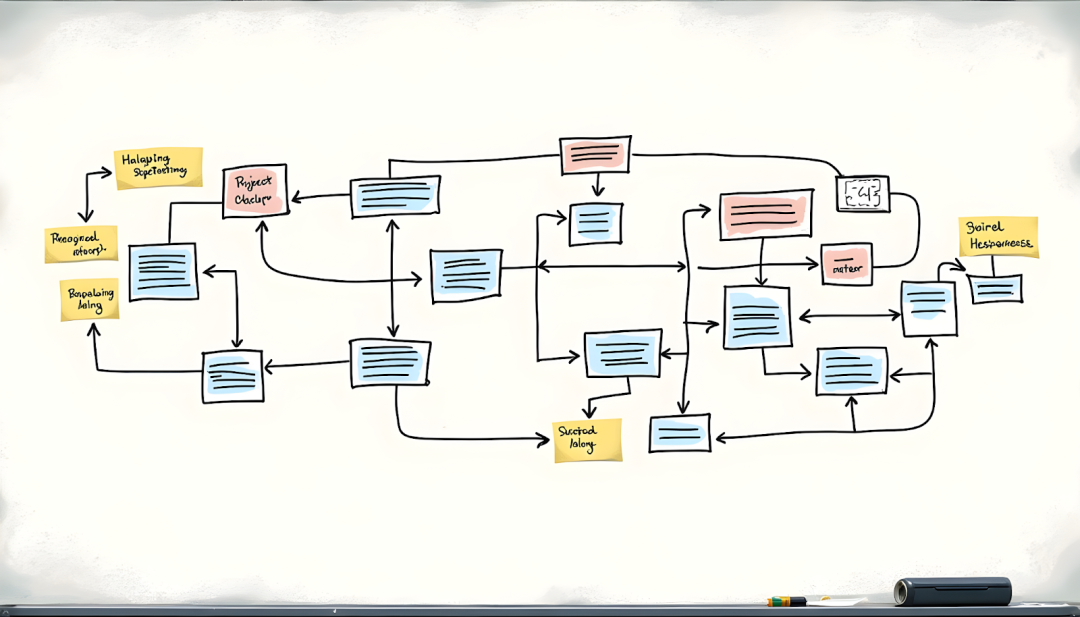
Process is the ability of an organisation to flow in an aligned way, reducing friction, misunderstanding, duplication and focusing on what is most important.
Imagine the flow of work being unencumbered by unnecessary steps, paperwork, conflict or management approval, it can reduce the time it takes to do something in surprising ways.
Good process is one of the most powerful ways to create new capacity in your organisation. It’s much cheaper than throwing people at the problem. Often who you need to hire next can be clearly identified when the process is clear. If the process is clear, roles are clearer, expectations are explicit instead of implicit and everyone has a better understanding of what the business/organisation needs from them. This buys time and sharpens focus.
Structure and scaffolding
Scaffolding is what you use to build something, before it can stand on its own.
I think of structure in an organisation as the scaffolding that allows people to be structured and clear as they are building, making or creating something. It might look like role descriptions and regular check-ins with your team to understand how they are doing, or it might look like a communication framework that allows everyone to know what’s going on so they can make decisions. It may be a formalised financial performance meeting. All these are ways of organising people, work and resources within a clear design, helping everyone understand and make sense of what can often be chaotic, unclear and subsequently exhausting. Fundamentally this is about capacity and sustainability.
The importance of emergence
It is critical to understand that at different times in an organisation’s lifecycle it’s going to need different processes and structures. Processes need to be developmentally appropriate. What is useful to 10 or 15 people no longer works for 30. What worked for 30 is not going to work for 120. This means that you have to get comfortable with the fact that process and structure will be emergent and will need to be adaptable as the business/organisation grows or shrinks. I noticed during COVID that a number of organisations shrank their numbers, and counterintuitively became more productive and efficient. No one saw that coming! Growing is not always a function of the team getting bigger.
Leveraging time and ability
The time it takes to map out the process flow, especially in a smaller organisation is worth every minute spent on it. The return on investment can be hundreds of hours of wasted time identified, reduced and eliminated. It creates awareness in team members about where things can fall into gaps and get lost. It can assist team members to realise how important their ‘small’ piece is to another department, and how critical it is to the overall success of the organisation. It identifies blocks in the system that devour time. It identifies gaps in the team, where there may be a need for a very specific skill set, or a general skill set. Mostly it gives people time back, a lot of it.
One of the unexpected outcomes of a process like this, is that the team develops an understanding of what happens across the business. This means they can identify problems that might affect other parts of the business and can be proactive in solving or communicating. There is a beautiful alignment that happens and people often express gratitude for understanding what everyone else does and how they fit into the larger picture.
If you are interested in finding out more about how to create useful process in your organisation contact Mignon at Mignon@thestrategycircle.co.za
Many people who are drawn to leadership roles, or who are entrepreneurial in nature, tend to be very responsible. This is a wonderful trait and creates a great deal of value in all aspects of one’s life.
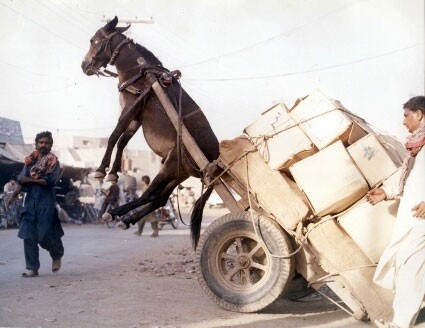
However, there can be a dark side to being responsible for ‘everything’. I often see this with leaders, they feel they have to take care of EVERYTHING. This is not humanly possible and can cause real stress and discomfort as your business or organization grows and there is more and more to take care of. It is often when we are overwhelmed and stressed that our personal issues tend to bleed into our work and we become less productive and can actually cause problems in our teams.
The personal and the professional
There is a very misleading illusion that our personal and professional lives are not connected. The more responsibility you take on as a leader, the less true that assumption is. Stress and overwhelm will tend to take us to our least useful behaviours. I have noticed that very stressed leaders can either become chaotic or over-controlling (any number of behaviors can play out here) none of which are useful in a team or organisation that wants to perform well. The leader of an organisation can often discharge stress into the team in unconscious ways. It’s 100% human and most people do it until they learn not to do it, because it’s really not useful or helpful. The cost of stressed leadership behaviour can be legion. Losing good team members, creating a toxic environment where people don’t feel safe, reducing trust (I wrote at length about that here) and impacting many different aspects of a business. Mostly culture and morale. Becoming uncontained as a leader due to exhaustion and stress is very dangerous to the health of an organisation and the health of the leader.
Responsibility and Pushing yourself
I have noticed that sometimes leaders can get into a mode where due to their own responsibility bias, they can push themselves too hard. Yes, this is part of the drive and success right? And it has a shadow, because it can push you into the red and beyond your SUSTAINABLE capacity. I have witnessed leaders burn themselves out, and then take years to recover. This is very expensive! And exhausting!
Pushing others
Yes, but pushing others is part of being a leader. Yes and no. When the pushing is unconscious, fear based and born from overwhelm it really does not create anything of value in a team. Pushing that is created with good process, checks and balances and the healthy oversight of a resourced leader can produce amazing results. And the main difference? The mental health and emotional resilience of the leader (or leadership team) as well as the quality of the processes and the shared maps of understanding that have been created in an organisation. I have seen teams burnt out and many years of building and value creation lost to unconscious pushing.
The cost and damage of burnout
Let’s be clear, everyone, and all teams at some stages in an organisation’s life need to go into the red for a while.
And most people can sustain a couple of weeks, and maybe even a couple of months of pushing hard. And then they have to rest, and if they dont…
One of the casualties of exhaustion and overwhelm that goes on for too long, is that people start making really poor decisions. Shortcuts are taken, communication is compromised. Client relationships can start to show cracks, internal relationships can become brittle and testy. People start getting sick more often, things get more and more behind and tempers flare. All of these are warning signs to slow down, take some perspective and regroup. But what tired leaders tend to do, is just push harder, themselves and everyone else. Again, what makes the most difference in this situation is when a leader is resourced and emotionally resilient and can support their team to make the best of the situation, as opposed to actively making the situation worse.
Your number one leadership priority
If you are the leader in your space, then you have to make sure that you are well, resilient and can make good decisions on behalf of your team and organisation.
This looks like:
Get enough rest – figure out what real, rejuvenating rest looks like for you. Daily, weekly, monthly, annually. This could be a run, a swim, enough sleep, quarterly long weekends away in the mountains with your family or friends. A decent holiday at least once a year. There are many ways that you can achieve this, but put it in your schedule like your life depends on it.
Do your personal work – As a leader, doing your personal work is critical, know yourself, be aware of your triggers and patterns. Understand how you operate. There are tools, books, courses, so many ways to learn about yourself, and by doing so, learning about others. This is a key leadership skill. Make sure you are dealing with yourself so that you do not play out unconscious destructive patterns in your organization. “If you don’t heal what hurt you you will bleed on people who didn’t cut you” – Unknown
Get support – support looks different for different people, what I will say is that you need someone, or a number of people in different roles who are listening to you,soundboarding your thinking, assisting you to manage your stress, and taking care of your wellbeing. Create structures of support. This could look like a monthly therapy session, a coaching relationship, a group of peers who have your back, a friend you can really talk to or a personal trainer who keeps you in shape. Pick your medicine, but make sure that you are keeping your mind clear and untangled, and when it gets tangled, you have a way to deal with it.
Make time in your schedule – to do what you know nourishes or feeds you, whatever it is that keeps you sane. Sane keeps you and your team from burning out. Take the time, no one is going to hand it to you, you have to be very proactive about this.
If you do this, if you make this investment, it will pay you back in time saved, relationships retained, drama avoided, conflict side stepped, energy managed and health preserved. Totally worth it.
If this resonated with you and you would like to find out more, or be supported with this, you are welcome to contact me on mignon@thestrategycircle.co.za
I have worked with over 600 businesses in the last 18 years and one of the refrains I hear the most from businesses of between 5 and 50 employees is, “I’m stuck! I’m so busy and overwhelmed, I can’t see the wood for the trees and I’m just surviving, I don’t know how much longer I can do this!”
I hear this from passionate people who are dedicated to their business and their staff. People who have been in business for 10 years and more (which makes them business superheroes) but are not where they thought they would be, questioning whether this business has been a good choice for them.
It always makes me sad to hear this. I know how hard it is to get past year two, never mind get to year ten with staff! Nobody really understands how hard it is, except others who are also in it.
Most small business owners (in my mind that means 5 to 50 employees) are so involved in the daily operations of their business that they do not have the time or energy to work ON the business – doing strategy, business development and thinking about the money beyond sending out invoices and chasing payments.
A small business owner has an astounding number of things to think about, do and organise. This is not for sissies. Only the toughest and most determined people are able to get to this point in a business and it is massively challenging.
In my experience, small businesses only grow sustainably when the owner has extracted themselves from the day-to-day operations and made time for the CEO role. CEO in a small business? Yes, absolutely.
People confuse the role with the person. Just because the business does not have a full-time CEO, does not mean that the ROLE is not important. I would like to suggest that if business owners made the time to look at the role of a CEO and to allocate even 20% of their time to those activities, that the business would grow and flourish in a whole new way.
What does this actually look like?
The ROLE of CEO in a small business
For obvious reasons the role of a CEO in a corporate is quite distinct from the role of a CEO in a small company, but the importance of the role is the same.
The CEO is responsible for leading the overall success of the organisation. They have to develop business strategy and plans that articulate strategic goals that are measurable and implementable, outlining the ways in which the business will grow and become more sustainable over time. The CEO ensures that the business is profitable, not just busy and that the business is properly managed in all the key areas. The focus here is growth.
Marketing and business development – ensuring that they understand the market, opportunities and industry developments.
Finance – making high-level investment decisions and managing the fiscal well-being of the company.
Human resources – understanding what the business needs from its employees and ensuring that the right people are in the right job.
Systems and processes – ensuring that the business takes the time to create the systems and processes that create efficiencies and keep the business relevant, especially regarding technology. Managing key stakeholder / client relationships to ensure that communication is appropriate and strategic alliances are maintained.
Creating and managing the culture of the organisation in order to retain good people and create an environment that promotes performance.
This role is different to an operations manager and this distinction is CRITICAL to the overall success of the business. Most people get trapped in the Operations Manager role. Many entrepreneurs will argue that this is their most valuable role. Yes and no.
Yes, an Operations Manager role is essential to the business. This role is important because it delivers on the sales promise of the business. This is about delivery and the focus here is efficiencies. Even in this role, too many entrepreneurs are doing too much and not managing enough.
Management of tasks and efficiencies – ensures that proper management activities are taking place across the areas of delivery. Operational meetings, reporting and performance tracking.
Planning – ensuring that the work of the business is going according to plan and that schedules, logistics and calendars are working in an aligned way.
Resource planning – ensuring that everyone has what they need to do their work properly, that the team knows what is expected of them and what their standard of delivery is.
Delivery of the service or product – ensuring that the client gets what they expect, when they expect it.
Budgeting – managing expenses and ensuring that money is well tracked and allocated.
Systems and administration – ensuring that all administrative tasks that support the successful delivery of product or service to the client takes place.
What happens in many businesses is that neither of these roles is properly understood or implemented. This results in lost opportunities, sluggish growth and lots of stress.
To give an example:
Angela’s story
Angela* runs a successful Food Delivery business and was feeling stuck. She felt that her ability to get to the activity that allows the business to grow was constantly being overwhelmed by her natural default to operations. She had previously been a very capable operations manager when she took over the business from her husband (who is a serial entrepreneur and already on to the next venture). She was running the business from her comfort zone – operations. She did not even realise that the distinction between the two roles was important. When we brought this to her attention she felt that she did not know how to be a CEO, the label frightened her as she assumed that it meant behaving like Steve Jobs or Richard Branson. These are not useful comparisons for a small company.
With encouragement from us she did some research into what CEOs do and looked to see if she could transfer any of her significant operational abilities to doing the tasks of a CEO. She reported back that understanding the role made a huge difference to how she prioritised what needed to be done for the business to grow. Within two weeks she had reorganised her team and set up a competent Operations Manager, whom she would manage to deal with most of the day-to-day that she had previously spent too much time on. This freed her up to become much more focused on marketing and sales and building a really good team. She is not completely out of the operations; the business is not big enough for that. But she has someone making sure that it’s moving along most of the time so that she can focus on growing the business by working ON the business and not IN the business.
Can a small business afford to have both a CEO and an Operations Manager? Mostly they can’t; but they can organise themselves to ensure that all the key activities of each role are happening. This is the secret, to ensure that time gets made for Growth (CEO) and Efficiencies (Ops Manager) and the entrepreneur can hold these two roles until the business is able to afford another person to hold either role depending on the natural inclination of the business owner. Often business owners love what they do and would much rather hold the operations role than that of CEO, BUT they have to understand the importance of the CEO role for growth and sustainability.
What to do?
Make time to understand what CEOs do and what operations managers do.
Make time, ANY time, to think with a CEO hat on…..even two hours a week will make a huge difference over time. It’s important to carve out time for each role. It’s important to understand the success strategies for each role and to implement them. This process can be slow, but if it is steady and you keep ensuring that the right activities are taking place, your business will be more successful in the long run. As the CEO you will have to think about things that may not be easy or comfortable for you (which explains the default to operations where you know what you are doing). Find out about strategy and how to do it. Learn about business finances and improving them step by step. Develop your business mindset, read, understand your industry better and adapt what you do to stay relevant. Image result for CEO hat
Reorganise the people/resources in your business to give you more time to work ON the business. Examples: get an au pair to fetch your kids and spend that time on marketing and opportunities. Outsource your invoicing/bookkeeping and use that time to create a growth strategy for your business. Take a long hard look at the resources in your business and see who could possibly take some of the operations load off you. If there is no one to do that, you need to reconsider your team. Without this process you are unlikely to grow your business. Even having a decent PA or admin person will free up enough time to put your CEO hat on. You don’t have to pay for a hugely expensive “Operations Manager” you have to buy yourself time to do the two roles properly. It is often helpful to spend an hour or two with an HR consultant who works with small businesses (your HR friend at a big corporate is not going to be any use to you). Let them help you map out a number of scenarios depending on what the business needs. We often get stuck thinking about the people we have instead of the roles we need. Just this small shift in thinking can change your life.
Talk to other business owners and find out how they are doing it – it’s always useful to talk to people who are also doing it or have done it. Don’t take business advice from people who are not running their own business – you don’t take parenting advice from people who don’t have kids, do you?
Set up simple management structures that will support you to run the business more efficiently and with greater clarity. This may sound daunting, but simple clear processes could really make a difference in your business. It’s important to distinguish between management processes (ON the business) and operational processes (IN the business).
Below is a list of critical ON the business priorities
Understand that what the BUSINESS needs is most important, this is Strategy 101.
Define clear roles and responsibilities (mapped out and agreed with staff).
Ensure processes and procedures are clear and understood (mapped out and agreed with staff).
Prioritise that management activity takes place – in regular meetings with set agendas, working on clearly defined goals that inform everyone’s work.
Develop a clear plan that is systematically implemented over time.
In conclusion, I would like to emphasise that if you want your business to grow and run smoothly without you being in a constant state of overwhelm, you have to make a distinction between these two important roles and make sure they are understood and implemented thoughtfully. The results will make it worthwhile, I promise.